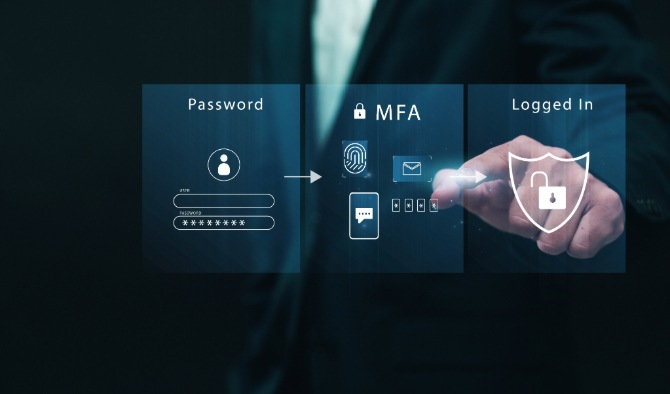

A second factor is not automatically a risk decision
A multi-factor prompt can stop someone who has only obtained a password. But asking every employee for the same additional proof at every sign-in does not necessarily make access decisions more intelligent. It can create friction during routine work while still failing to distinguish an ordinary login from one that deserves closer scrutiny.
That is the difference between a fixed MFA rule and adaptive authentication. A fixed rule asks for the same factor because a user is signing in. An adaptive policy considers the circumstances of the request and decides whether to allow access, ask for stronger verification, or block the attempt. The objective is not to challenge people constantly. It is to apply the right level of assurance to the risk of the particular session.
Start with the application, not the authentication method
Before comparing authenticator types, classify the applications being protected. Reading an internal knowledge base is not the same as approving a high-value payment, changing payroll details or administering a production environment. The consequences of account misuse are different, so the policy should reflect that difference.
A practical classification can consider the sensitivity of the information, the business impact of an unauthorised action, the privileges available inside the application and whether the application can expose reliable sign-in signals. This gives security teams a reason for setting different assurance requirements instead of applying a blanket rule simply because a platform supports MFA.
The same user may therefore have a low-friction route into a routine application and a stronger check before reaching a sensitive function. Where the application cannot make decisions at an individual action level, the organisation can still apply policy at the application or session boundary.
What can an adaptive policy consider?
Adaptive authentication is only as useful as the signals available to it. Common inputs include the application being accessed, the user or group, the device and network context, the time of the request, and whether the request fits the organisation’s established access patterns. Some environments may also use additional signals from endpoint or security tools.
No single signal should automatically be treated as proof of malicious activity. A login from a new location may be legitimate for an employee who is travelling. A familiar device may still be compromised. Good policies combine context with the sensitivity of the requested resource and the strength of the available evidence.
The policy outcome should be explicit. A low-risk request might proceed under the organisation’s normal sign-in requirements. A request that carries more risk could trigger step-up authentication. A request that breaches a clear control, such as a prohibited source or an account status restriction, may be denied or sent for review.
For organisations reviewing policy design, the relevant capabilities can be explored through multi-factor authentication and adaptive access policies, including how authentication methods and context-based controls are brought together.
Choose factors for the job they need to do
Different factors have different operational and security characteristics. WebAuthn-based methods can provide phishing-resistant authentication when implemented correctly. Push approval can be convenient but needs safeguards against approval fatigue. Time-based one-time passwords work without a mobile data connection, while SMS or email codes may be useful as fallback options but should be assessed against the organisation’s threat model.
The right design rarely depends on choosing one factor for every situation. It requires a clear hierarchy, sensible recovery procedures and a way to avoid turning a lost phone or temporary device issue into an uncontrolled bypass. Fallback routes deserve the same scrutiny as the main route; otherwise, attackers may target the easiest exception rather than the strongest control.
Common policy mistakes
One common mistake is treating location as a verdict. Location can add context, but it is not a reliable identity check by itself. Another is creating so many exceptions that the written policy and the actual sign-in experience become different things. Temporary exemptions should have an owner, a reason and an expiry date.
Teams can also make policies too aggressive at the outset. If legitimate users are repeatedly challenged, they may become conditioned to approve prompts without thinking or look for workarounds. A staged rollout, clear user communication and a monitored exception process are more sustainable than switching on every possible condition at once.
A practical rollout sequence
Begin with an inventory of applications and the business actions they support. Group them by risk and identify the sign-in signals each one can provide. Next, define a small number of policy outcomes: allow, step up, deny and, where appropriate, notify or route for review.
Pilot the policies with a representative group before extending them across the organisation. Review challenge rates, failed attempts, support tickets, exception frequency and security events together. A high challenge rate is not automatically evidence of a stronger control; it may point to poor signal quality or a policy that is too broad.
Finally, revisit the rules as applications, user populations and working patterns change. Adaptive authentication should be treated as an operating control that needs ownership and tuning, not a one-time configuration project.
The useful question is when to ask for more proof
A mature MFA programme does more than add another login step. It connects application sensitivity, identity context and authentication strength so that additional checks appear when they have a clear purpose. Organisations evaluating a multi factor authentication solution should therefore ask how policy decisions are made, what context can be used, how exceptions are controlled and whether decisions can be reviewed later.
The same thinking connects with identity-led Zero Trust access: access decisions should consider both the session and the entitlement behind it.
That is also where authentication fits into a broader identity strategy. Adaptive checks help decide whether a session should proceed; governance controls help determine whether the person should hold the underlying access at all. Treating both questions as part of one access model makes the result more useful than adding another prompt to every login.