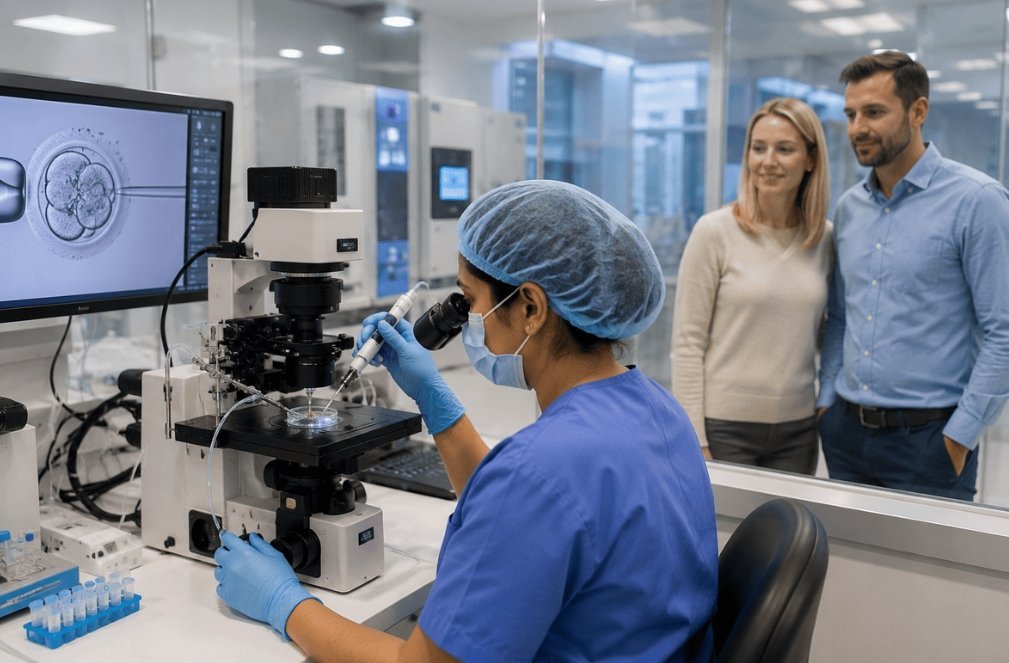

Infertility can have many causes, and treatment is not the same for every couple. Depending on age, medical history, duration of infertility, ovarian reserve, sperm health, ovulation, fallopian tube function, and previous treatment, doctors may recommend different approaches.
Fertility treatment can range from medicines that help ovulation to procedures such as intrauterine insemination (IUI) and in vitro fertilisation (IVF). Some couples may also benefit from surgery or treatment for an underlying hormonal or reproductive condition.
Understanding how these options differ can help couples have more informed discussions with a fertility specialist and choose an approach suited to their individual circumstances.
What Are the Main Fertility Treatment Options?
Fertility treatment generally progresses from simpler approaches to more advanced procedures when appropriate. However, this does not mean every couple must follow the same sequence.
Common Treatment Options
Depending on the cause of infertility, treatment may include:
-
Lifestyle and medical optimisation
-
Ovulation-inducing medicines
-
Timed intercourse
-
Intrauterine insemination
-
In vitro fertilization (IVF)
-
Intracytoplasmic sperm injection (ICSI)
-
Reproductive surgery
-
Donor eggs or sperm in selected situations
-
Fertility preservation
The choice depends on the underlying cause and individual circumstances. A fertility specialist may recommend a treatment directly rather than starting with less intensive options when there are factors that make simpler approaches unlikely to work.
Ovulation Medicines and Timed Treatment
Ovulation problems can make it difficult to become pregnant because eggs may not be released regularly or at all. Medicines can sometimes help stimulate ovulation and improve the chances of conception.
Who May Benefit?
Ovulation treatment may be considered for people with conditions such as irregular ovulation or certain hormonal disorders. Depending on the medication, doctors may monitor follicle development using ultrasound and sometimes blood tests.
Treatment may then be combined with timed intercourse or IUI.
However, fertility medicines can have side effects and may increase the risk of multiple pregnancy. They should therefore be used under appropriate medical supervision rather than without evaluation.
What Is IUI?
Intrauterine insemination, or IUI, is a fertility treatment in which prepared sperm is placed directly inside the uterus around the time of ovulation. This reduces the distance sperm must travel to reach the egg.
When Is IUI Considered?
IUI may be considered in situations such as:
-
Unexplained infertility
-
Certain ovulation problems
-
Some mild male-factor fertility issues
-
Use of donor sperm
-
Difficulty with intercourse
IUI is less invasive and generally less complex than IVF. However, its success depends on factors including age, sperm quality, ovarian function, and the underlying cause of infertility.
How IVF Differs From IUI
IVF involves fertilising an egg with sperm outside the body in a laboratory. The resulting embryo is then transferred into the uterus. This makes IVF more involved than IUI but can be useful when other fertility treatments are unlikely to provide sufficient benefit.
Basic IVF Process
An IVF cycle commonly involves:
-
Ovarian stimulation
-
Monitoring through ultrasound and blood tests
-
Egg retrieval
-
Fertilisation in the laboratory
-
Embryo development
-
Embryo transfer
-
Pregnancy testing
Not every cycle results in an embryo suitable for transfer, and pregnancy is not guaranteed. Several factors influence the outcome, including age, egg and sperm quality, embryo development, and underlying reproductive conditions.
When Might IVF Be Recommended?
IVF may be considered when there are specific fertility factors that make other treatments less suitable or when previous treatments have not resulted in pregnancy.
Common Situations
Doctors may consider IVF for:
-
Blocked or damaged fallopian tubes
-
Severe male-factor infertility
-
Certain cases of unexplained infertility
-
Reduced ovarian reserve
-
Some forms of endometriosis
-
Fertility preservation
-
Previous unsuccessful fertility treatments
-
Certain genetic or reproductive circumstances
The decision should be individualised. IVF is not automatically the “best” treatment for everyone, and a specialist should explain expected benefits, limitations, risks, and alternatives.
What Is ICSI and How Does It Compare With IVF?
Intracytoplasmic sperm injection, or ICSI, is a laboratory technique commonly used as part of IVF. Instead of allowing sperm and egg to fertilise naturally in a laboratory dish, an embryologist injects a single sperm directly into an egg.
When Is ICSI Used?
ICSI may be considered when there is significant male-factor infertility, very low sperm numbers or movement, previous fertilisation failure, or when sperm has been surgically retrieved.
ICSI does not replace IVF. It is a fertilisation technique performed within an IVF cycle when clinically appropriate.
Can Surgery Treat Some Fertility Problems?
Certain structural reproductive problems can sometimes be treated surgically. The appropriate procedure depends on the condition and whether correcting it is likely to improve fertility.
Examples of Reproductive Surgery
Procedures may be considered for:
-
Certain fibroids
-
Endometriosis
-
Endometrial polyps
-
Some uterine abnormalities
-
Selected tubal problems
-
Certain male reproductive conditions
Surgery is not appropriate for every fertility problem. Specialists consider the patient’s age, ovarian reserve, duration of infertility, severity of the condition, and alternative treatment options before recommending an operation.
IVF vs Other Treatments: Quick Comparison
Treatment
How It Works
Commonly Considered For
Ovulation medicines
Encourage egg release
Ovulation problems
Timed intercourse
Intercourse planned around ovulation
Selected ovulatory cases
IUI
Prepared sperm placed in uterus
Unexplained or mild infertility
IVF
Eggs and sperm combined in laboratory
Several infertility causes
ICSI
Single sperm injected into an egg
Certain male-factor cases
Surgery
Corrects selected structural problems
Fibroids, endometriosis, tubal or uterine issues
The table provides a general comparison, but treatment selection should always be based on an individual fertility assessment.
How Age Influences Treatment Decisions
Age is an important factor in fertility because egg number and egg quality generally decline over time. This can influence the likelihood of conception and the expected response to different treatments.
Why Individual Assessment Matters
A younger person with regular ovulation and healthy reproductive anatomy may have different treatment options from someone with reduced ovarian reserve or significant tubal disease.
In Malad, couples looking for the best IVF centre in Malad should consider whether the fertility team provides appropriate evaluation, explains alternatives clearly, discusses realistic expectations, and recommends treatment based on individual medical findings rather than using the same approach for everyone.
How Specialists Decide Between IUI and IVF
The decision between IUI and IVF depends on several clinical factors. Doctors may consider the woman’s age, ovarian reserve, sperm quality, fallopian tube status, duration of infertility, previous treatment outcomes, and the likely benefit of each approach.
Questions to Discuss With Your Specialist
Before choosing treatment, ask:
-
What is causing or contributing to infertility?
-
Are my fallopian tubes open?
-
What is my ovarian reserve?
-
Is sperm quality affecting treatment?
-
Would IUI be reasonable?
-
Why might IVF be recommended?
-
What are the expected benefits and risks?
-
How many treatment cycles may be considered?
A clear discussion can help couples understand why one option may be more appropriate than another.
Risks and Considerations
Every fertility treatment has potential limitations and risks. Medicines used for ovarian stimulation can cause side effects and, rarely, ovarian hyperstimulation syndrome. Fertility procedures may also involve discomfort, emotional stress, financial costs, and the possibility of unsuccessful treatment.
IVF can also involve risks related to egg retrieval, pregnancy complications, and multiple pregnancy depending on the treatment strategy. Specialists aim to minimise these risks through appropriate monitoring and individualised treatment planning.
Conclusion
IVF is an important fertility treatment, but it is only one option among several. Ovulation medicines, timed treatment, IUI, surgery, ICSI, and fertility preservation may all have a role depending on the underlying cause and individual circumstances.
There is no single fertility treatment that is appropriate for every couple. A detailed evaluation can help identify contributing factors and determine which approach offers a reasonable balance between potential benefits, risks, treatment burden, and personal preferences.
The most useful first step is usually an open discussion with a qualified fertility specialist who can explain the available options and create an individualised treatment plan.
Frequently Asked Questions
1. Is IVF better than IUI?
IVF is not automatically better than IUI. The appropriate treatment depends on factors such as age, infertility cause, sperm quality, ovarian reserve, and tubal health. IVF may be recommended when IUI is unlikely to provide sufficient benefit.
2. How many IUI attempts are usually recommended?
The number of IUI attempts varies according to age, fertility factors, treatment response, and clinical circumstances. If several appropriately planned cycles are unsuccessful, a specialist may discuss whether moving to another treatment, including IVF, would be appropriate.
3. Does everyone with infertility need IVF?
No. Some couples conceive with lifestyle changes, ovulation treatment, timed intercourse, IUI, or treatment of an underlying condition. IVF is generally considered when specific fertility factors make it appropriate or when other approaches have not worked.
4. Is ICSI different from IVF?
ICSI is a fertilisation technique used during an IVF cycle. It involves injecting a single sperm directly into an egg. It may be useful for certain male-factor infertility situations or previous fertilisation problems.
5. How do doctors choose the right fertility treatment?
Doctors consider age, ovarian reserve, ovulation, fallopian tube health, sperm quality, medical history, infertility duration, previous treatments, and personal circumstances. These factors help determine which treatment is most appropriate for the individual couple.