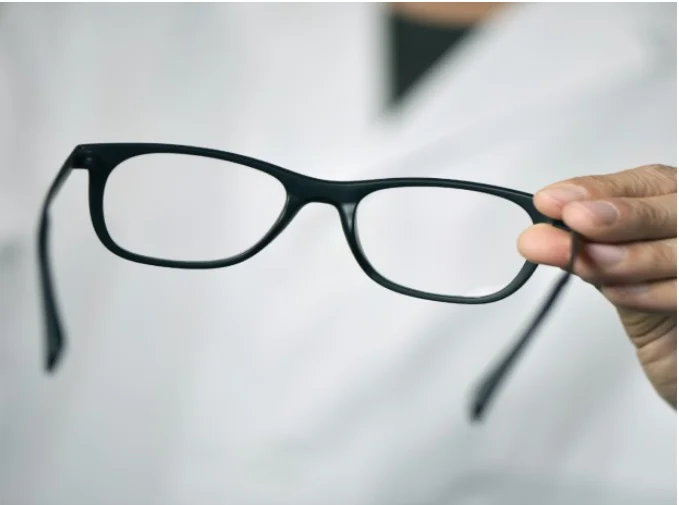

In our daily lives, vision is something many of us take for granted — until it starts to blur, strain, or shift depending on the distance and task. That’s when the world of eyewear becomes more than a fashion accessory. For many people, prescription glasses or progressive lenses become essential tools for clear vision and comfort. But with so many types, lens materials, and optical technologies out there, it can feel overwhelming. This article demystifies prescription glasses and progressive glasses — what they are, how they work, and how to choose the right pair for your vision needs.
Elklook: Prescription Glasses
At their core, prescription glasses are eyewear tailored to correct an individual’s vision based on a precise eye examination. During an eye exam, an optometrist or ophthalmologist determines whether you’re nearsighted (myopia), farsighted (hyperopia), have difficulty with near vision (presbyopia), or suffer from conditions like astigmatism.
Once your vision profile is established — often through a unit called a “prescription” — lenses are custom-crafted with specific curvature, thickness, and refractive power to compensate for your eyes’ optical deficiencies. The result: clearer, sharper vision at distances your natural eyesight struggles with.
Prescription glasses differ significantly from simple reading glasses or over-the-counter “one-size-fits-all” lenses. Because they take into account your unique vision pattern (per eye, often with separate corrections for right and left), they provide better clarity and reduce strain over time.
The Anatomy of a Prescription Pair
A typical pair of prescription glasses consists of:
- Frame: The structure holding the lenses — metal, plastic, acetate, or a combination. Frames are about comfort, fit, style, and sometimes durability.
- Lenses: The heart of your glasses — built to your prescription. Materials include plastic (CR‑39), polycarbonate, high-index plastic (for thinner lenses), and glass (less common now due to weight and breakage risk).
- Coatings and Treatments: These can include anti-reflective coating (to reduce glare), scratch-resistant coating, UV filters, blue-light filtering, or mirror/transition tints. These coatings significantly enhance comfort and lens longevity.
When your optometrist writes a prescription, it will often look like “‑2.50 DS” for nearsightedness, or “+1.75 DS” for farsightedness, possibly with a cylinder (CYL) and axis value for astigmatism. The eyewear lab uses these values to grind or mold lenses that counteract your eye’s imperfections.
When Do You Need Prescription Glasses?
People usually start needing prescription glasses when:
- Distant objects appear blurry (common sign of myopia).
- Near objects are hard to focus on (hyperopia or presbyopia).
- Vision becomes distorted or “wavy” (often due to astigmatism).
- You experience frequent eye strain, headaches while reading/working, or discomfort with screen use.
- Your eyesight changes over time; even if you had “perfect vision,” aging eyes or eye health issues might make corrective lenses necessary.
Even kids can have vision problems. It’s recommended for children to have their first comprehensive eye exam around age 6–7, or earlier if there are signs of squinting, misplaced eyes, or difficulties at school.
Elklook Progressive Glasses: What They Are and Why They Exist
As we age — typically in our 40s or 50s — many people experience a natural decline in near vision, a condition called presbyopia. Reading small print or seeing close objects becomes progressively harder. Historically, the solution was bifocal lenses (with two distinct lens zones) or multifocal (segmented) lenses. But those came with drawbacks: abrupt jumps between distance and near vision zones, visible lines on the lenses, and awkward gaze adjustments.
That’s where progressive glasses — or progressive addition lenses (PALs) — come in. Progressive lenses offer a smooth gradient in lens power from the top (for distance vision) to the bottom (for near vision), with intermediate zones in between (for computer work, middle-distance objects, etc.). The result: one single pair of glasses accommodates multiple vision needs — far, midrange, and near — seamlessly and without visible line segments.
Advantages and Limitations of Progressive Glasses
Advantages:
- Versatility: One pair replaces separate reading glasses, distance glasses, and even computer glasses.
- Aesthetics: No visible lines like bifocals or trifocals — they look like regular lenses.
- Smooth Transitions: You don’t need to switch glasses when shifting from reading to seeing far; the transition is gradual, natural.
- Convenience: Less to carry around — fewer glasses overall.
Limitations / Challenges:
- Adaptation Period: Many first-time wearers report initial dizziness, “swimmy” vision, or awkward head/eye movements while adjusting. This generally fades within a few days or weeks.
- Narrow Peripheral Zones: The “side vision” areas of progressive lenses can be subject to blur or “soft spots.” It may take time to learn to look through the central correct zones.
- Cost: Progressive lenses are typically more expensive than single-vision lenses due to their complex manufacturing process.
- Custom Needs: For certain professions or hobbies (e.g., heavy-duty reading, fine detail work, or very long-distance requirements), a more specialized solution might still be ideal.
How to Choose Between Prescription Single-Vision and Progressive Lenses
Deciding whether you need simple prescription glasses or progressive lenses depends on a few factors:
- Your Vision Needs Over Distance Ranges
- If you only need correction for single tasks — e.g. nearsightedness for driving or farsightedness for reading — single-vision lenses are ideal.
- If you require aid for near, intermediate (computer), and far vision all in daily life, progressive glasses offer more versatility.
- If you only need correction for single tasks — e.g. nearsightedness for driving or farsightedness for reading — single-vision lenses are ideal.
- Your Age & Eye Condition
- Younger people (teens, 20s, 30s) with stable vision rarely need progressive lenses.
- Those in mid-life or older, especially experiencing presbyopia, gain most benefit from progressives.
- Younger people (teens, 20s, 30s) with stable vision rarely need progressive lenses.
- Budget & Willingness to Adjust
- Progressives cost more — if budget is tight, two pairs of single-vision glasses (e.g. distance and reading) might suffice.
- Also consider whether you’re willing to adapt to the slight learning curve of using progressives.
- Progressives cost more — if budget is tight, two pairs of single-vision glasses (e.g. distance and reading) might suffice.
- Lifestyle and Daily Tasks
- If you spend most of your day switching between reading, computer work, and looking at various distances, progressives add convenience.
- But if you have specific tasks needing wide, precise visual fields (like graphic design, detailed manual work, or frequent peripheral vision use), the narrower zones in progressives can feel limiting.
- If you spend most of your day switching between reading, computer work, and looking at various distances, progressives add convenience.
Tips for Getting the Most Out of Prescription and Progressive Glasses
- Get a Comprehensive Eye Exam: Ensure your prescription is up-to-date and accurate — especially critical for progressive lenses.
- Choose Quality Lenses & Frames: Durable frames and scratch/anti-reflective coatings increase comfort and lifespan. High-index plastic lenses keep thickness down for strong prescriptions.
- Allow an Adjustment Period: For first-time progressive wearers, practice using them gradually — e.g. start with short periods of reading or walking indoors, then expand to full-day use.
- Use Good Fit and Measurements: For progressives, precise measurements (pupil distance, lens height, frame fit) are essential; poor alignment can cause discomfort or distorted vision.
- Care for Your Glasses Properly: Clean lenses with microfiber cloth and lens cleaner — avoid rough fabrics or strong chemicals. When not in use, store them in a protective case to avoid scratches.
- Consider Specialized Lenses If Needed: Some eyewear makers offer occupational progressives (optimized for computer/desk work), sports-specific lenses, or anti-blue-light coatings for frequent screen users.
When to Consult an Eye Care Professional Rather Than Self‑Diagnose
While many people resort to ready-made reading glasses for near vision or generic over-the-counter eyewear, there are times when consulting a professional becomes essential:
- Rapid Changes in Vision: If your eyesight worsens quickly or fluctuates often, it may signal underlying health conditions (e.g. diabetes, cataracts, glaucoma).
- Headaches, Eye Strain, Double Vision or Distortions: Particularly when using screens or during daily tasks.
- Children’s Vision: Child vision problems can affect learning, reading, and overall development — early detection is critical.
- Occupational Needs: Jobs requiring accurate vision over various distances, like drivers, pilots, tailors, or graphic designers — a professional fitting helps ensure safety and comfort.
An eye care professional can also screen for other issues such as dry eye, color vision deficiency, or eye muscle imbalances. Prescription glasses can’t address those, but some conditions might be helped with specialized lenses or treatment.
The Future of Prescription Eyewear & Progressive Lenses
Eyewear technology continues to advance. Some trends and innovations worth noting:
- Digital Free‑Form Lenses: Custom-made lenses using digital surfacing technology deliver sharper vision with fewer distortions compared to traditional progressive lenses.
- Photochromic / Transition Lenses: Lenses that automatically darken in sunlight — useful for people who spend time both indoors and outdoors, reducing need for a separate pair of sunglasses.
- Blue Light / Anti‑Glare Coatings: With increasing screen time (computers, smartphones), these coatings alleviate glare, reduce eye fatigue, and may improve sleep by filtering blue light.
- Lightweight Materials: High-index plastics and even newer materials provide equivalent refractive power with thinner, lighter lenses — boosting comfort, especially for strong prescriptions.
- Smart Glasses: Although still emerging, some eyewear now integrates augmented reality (AR), adjustable focus, or digital displays — potentially revolutionizing how we combine vision correction with technology.
As these technologies evolve, prescription eyewear may become even more convenient, tailored, and multifunctional.
Final Thoughts
Good vision is a cornerstone of daily life — affecting how we work, read, interact, and navigate the world. While over-the-counter glasses may suffice for some casual needs, prescription glasses — especially with progressive lenses — offer a tailored, precise way to correct vision across multiple distances.
If you’re experiencing any kind of visual discomfort, blurry vision, or difficulty in switching between near and far tasks, it’s worth consulting a qualified eye care professional. With a correct prescription and quality lenses, prescription glasses (or progressive lenses) can significantly improve clarity, comfort, and overall quality of life.
Whether you go for simple single‑vision glasses or advanced progressive lenses, the right pair — properly fitted and maintained — has the power to transform the way you see the world.