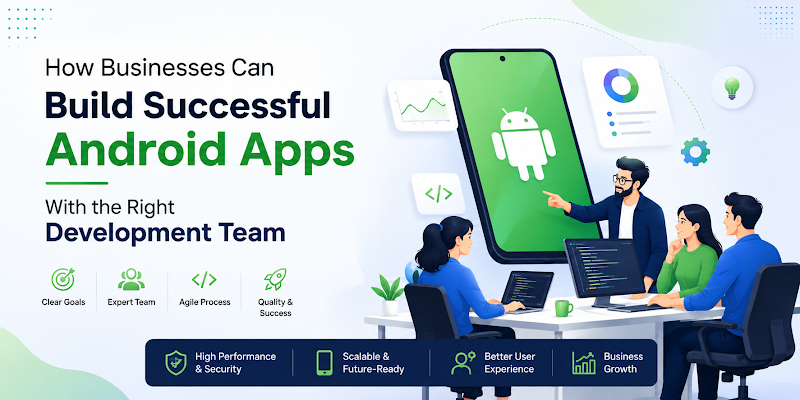

Android apps change how companies reach people, handle daily work, and make money. You see them everywhere. They show up in app stores, banking tools, health apps, food and package delivery services, schools, and mobile games. A lot of firms spend on Android apps to grow their presence online.
But an idea alone will not carry the project. The team that builds it matters more. A solid group can turn your plan into an app that keeps user data safer, feels simple to use, and can get better after launch. If you pick the wrong people, you may get late delivery, slow screens, weak security, and costs that rise beyond what you first thought.
If you are planning a new app, you should learn how to choose an Android dev team. You should also learn what your job is after you hire them.
Start With a Clear Business Goal
Before you speak with hire Android app developers, explain what you want the app to do. It should solve a real problem. Do not build it just because other companies made similar apps.
Next, note who will use it. Then write what your business expects to gain. After that, spell out the results you want. For example, a shop might want more mobile purchases. A delivery service might need live updates as events happen. It might also need tools that help drivers keep track of their tasks.
Define the Core Features Before Development
A strong Android app does not need a huge list of extras. If you load in a lot from day one, the app can feel messy and slow to learn. It also takes longer to build, and that can push the budget up.
Start by choosing the features that tie to your main aim. The right set depends on what your app is for. In many cases, you can keep it tight and add only what people want at the start.
-
User registration and secure login
-
Personalized user profiles
-
Search and filtering
-
Push notifications
-
In-app payments
-
GPS and location tracking
-
Social media integration
-
Real-time chat
-
Analytics and reporting
-
Admin dashboard
-
Third-party API integration
A minimum viable product helps. Release the simple version first. Then pay attention to how users act inside the app. After that, improve it in small steps.
Choose the Right Android Development Team
Next, find an Android team that matches your situation. The team’s skill level shows up in the final polish. Some groups use their own staff. Others work with freelancers. Still others pick a company that does custom Android projects.
When you look at partners, do not only judge what they shipped before. See what they built that is close to your project. Focus on solid engineering, plain talk, and a build process that makes sense. Also ask how they deal with security. Then check what kind of help they offer once the app is live.
A good partner should be able to cover the tech parts and the business parts too.
Check Technical Expertise
Android work is not just about coding. It also takes knowledge of the newer Android tools, common programming languages, and the way APIs connect systems. Teams often deal with app databases, cloud services, security rules, and ways to keep the app running smoothly.
Companies should check if the team has done similar work before. They should confirm the team can handle the tools that match the app they want.
What a team uses can vary by project. Some apps rely on Kotlin or Java. Others use Jetpack Compose. Many teams work with Firebase, REST APIs, cloud services, and payment systems. Some also add AI features and other add-ons.
Skills matter even more when an app has many moving parts. It is also critical when the app must handle lots of users at once.
Focus on UI/UX From the Beginning
Start with the user interface and user experience. From the start, aim for screens that feel easy to use. People want apps that load quickly and make sense right away. A strong app can still disappoint if the flow is confusing.
The team should collaborate with UI and UX designers. Together they can shape a steady experience across the whole product. The work should cover how people move through the app, font choices, accessibility needs, onboarding steps, screen structure, and the little actions users take each day.
Before any build work starts, the business can ask for wireframes and prototypes. These early views let decision makers spot issues sooner. That can save time and effort later.
When design stays centered on users, the app tends to hold attention better. It can also support stronger return use and higher overall happiness.
Prioritize Security
You do not tack security on at the end. Android apps may touch private data every day. That can include full names, payment and card details, GPS trail data, and other signals tied to where someone is. It can also include company notes or internal business records.
The team has to use strong login checks. Any stored data should be encrypted. Links and screens that handle input must be protected. Payment steps need safe paths and clear rules. User access rights have to be set with care. The app should be checked again and again to find weak spots before attackers do.
People also need straightforward answers about their data. What data is used for matters? How data is kept can differ by industry. Location can change the rules too. Because of that, the app may have to follow specific privacy and security requirements.
When a team treats this work as real work, risk drops. Customer trust stays steadier. The business also gets better protection.
Build for Scalability
Growth needs attention early as well. A system that feels fine at 1,000 users can act poorly at 1,000,000. If you plan for that up front, you avoid a lot of trouble later.
A solid design can scale as usage rises. Cloud tools can support that. A modular layout helps with updates without chaos. Databases should be set up for more rows and more reads. APIs should handle heavier loads. The backend should stay fast as traffic grows.
This also applies when new features are added. The app should be built so new pieces do not force a full rewrite. Handled this way, teams usually fix less later. Businesses can also avoid extra costs while the product changes.
Use Agile Development and Continuous Communication
Mobile app work rarely goes in one line. After each round, the business can look at what is ready, give feedback, and adjust the next steps while the app is still in progress.
Teams should also talk a lot. Before any deal is final, the business should agree on the update schedule, the tools for the project, who the main contact is, and how to raise an issue.
When updates are clear, people stay aligned. This helps prevent mix-ups.
Test the App Across Real-World Scenarios
Do testing while the app is being built. Do not wait only for the final release. A good team checks the core parts, how easy it feels to use, load and response time, fit across devices, and safety. They also test reliability. For Android, that means trying more than one screen size, multiple OS versions, and different device setups.
Real customers can spot issues that do not appear on a developer device. You can see slow start times, crashes, battery drain, layout problems, or trouble when the app connects to networks.
You can also run a beta with a small set of real users. After you read their feedback, you can roll it out wider.
Plan for Launch and Post-Launch Support
Getting an app into Google Play is only the start. After that, teams still have to keep an eye on live behavior, reply to reviews, fix crashes, and push updates when something breaks.
A solid support partner can take on this work. You may see help with app speed checks, stability watch, security fixes, updates for newer devices, and maintenance across Android changes. They also help when bugs appear and teams need quick help.
Before any coding begins, a business should spell out what support will include. Clear coverage makes it easier to plan the budget. It also cuts down on delays caused by unclear roles.
Know When to Hire Android App Developers
If a company already has an in house tech team, it might hire Android developers for one project. It might also add people for steady support.
This can fill a skills gap without bringing in a whole mobile group. Still, you should not decide only from a resume. Test the coding ability. See how the team talks and shares ideas. Review past work on apps like yours. Ask how they solve hard problems. Also confirm they are comfortable with the app tools and the current stack.
For larger builds, a full team can work better than one hire. This is true when the work covers UI design, backend tasks, QA testing, DevOps work, and project tracking.
Measure Performance After Launch
Once the app is live, watch the metrics that actually reflect quality. Do not rely on downloads alone to judge success.
Useful metrics can include:
-
User retention
-
Daily and monthly active users
-
Session duration
-
Conversion rates
-
Customer acquisition cost
-
In-app purchases
-
Crash rates
-
App store ratings
-
Feature engagement
You can learn a lot from analytics. It shows how people move through the app and what they tap on. Teams can then fine-tune screens, flows, and tools. They can also decide where new work should go first.
Final Thoughts
A solid Android app is not only a great idea. You also need a real plan. There should be a budget that matches the work. The design should be built around users. The tech must be stable. Security needs real care. Testing should be done in depth. And the team has to turn business needs into something that works day to day.
A reliable custom Android app development company helps beyond code. They can guide you during planning. They can support early prototypes too. They help with build work, QA, release steps, and fixes after launch.
Pick a team for more than claims in a pitch. Look at their track record. Check their technical skill. See how they communicate. Ask about scaling for the future.